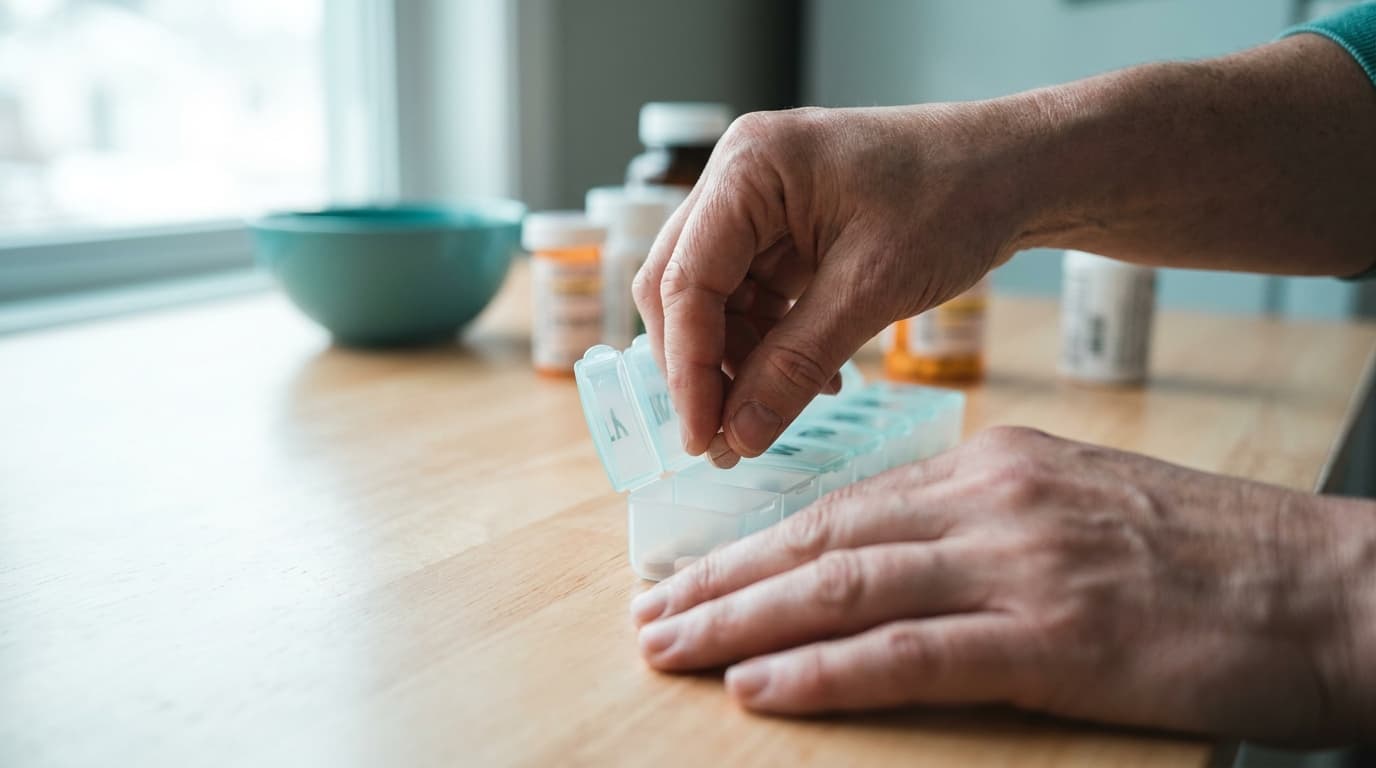
Understanding Your Prescription: What the Label Actually Means
Prescription labels are full of abbreviations that rarely get explained. Here's a plain-language guide to reading your prescription so you take your medicine correctly.
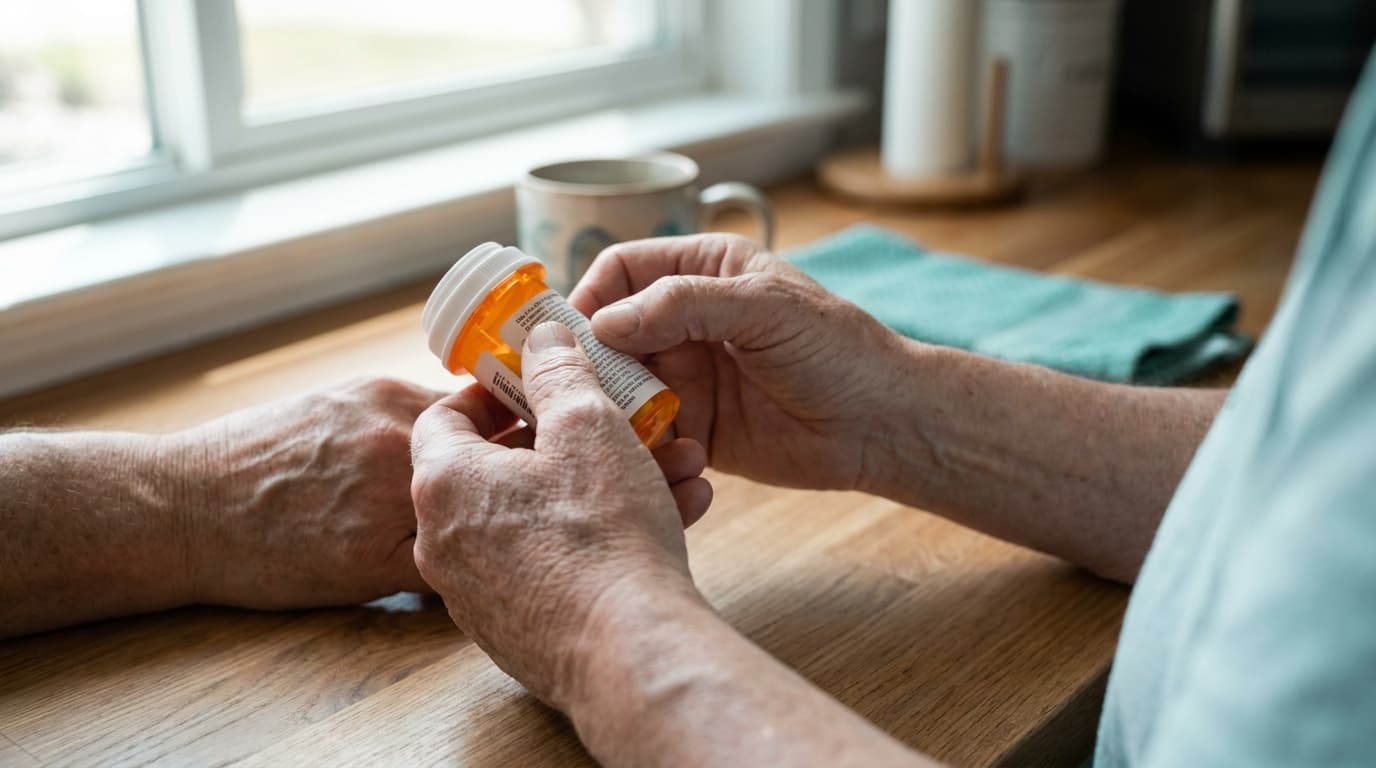
Prescription labels are written fast, by busy people, in a shorthand that dates back to Latin medical tradition — and almost nobody explains it to the patient actually taking the medicine. If you've ever stared at a label wondering what "1 tab BD" or "PRN" means, you're not alone, and it's worth five minutes to understand it properly, because getting it wrong is one of the most common and most preventable medication mistakes.
The basic anatomy of a label
Every prescription label generally tells you five things: the medicine name and strength, how much to take (the dose), how often (the frequency), how to take it (the route, usually oral), and for how long (the duration). Confusion almost always comes from the shorthand used for frequency and timing.
Common frequency abbreviations, decoded
- OD — once daily
- BD / BID — twice daily
- TDS / TID — three times daily
- QDS / QID — four times daily
- PRN — as needed (only when the symptom occurs, not on a fixed schedule)
- STAT — immediately, as a one-time dose
- HS — at bedtime
- AC — before meals
- PC — after meals
If your label says "BD," it means twice a day — but when, exactly? This is where labels can mislead patients into bad timing.
The mistake most people make: spacing doses evenly
"Twice daily" doesn't just mean "sometime in the morning and sometime in the evening" — it usually means roughly every 12 hours, so the medicine stays at a steady level in your body. Taking your morning dose at 8 a.m. and your evening dose at 6 p.m. isn't twelve hours apart; it's ten and fourteen, unevenly. For medicines where steady levels matter — many antibiotics, for instance — genuinely even spacing (say, 8 a.m. and 8 p.m.) matters more than people assume.
The same logic applies to "three times daily": that's roughly every 8 hours, not simply "morning, afternoon, evening" squeezed into your waking hours.
"With food" and "on an empty stomach" aren't preferences
These instructions usually exist for a specific reason: some medicines irritate the stomach without food, others are absorbed poorly with food, and some interact with specific foods altogether. Skipping this instruction because it seems like a minor detail can make a medicine less effective or harder to tolerate — it's worth following exactly as written, and asking if you're unsure why it's specified.
Understanding the full course — and why finishing it matters
For antibiotics especially, "duration" isn't a suggestion. Stopping as soon as you feel better, rather than completing the full course, is one of the most common reasons infections return — and a meaningful driver of antibiotic resistance more broadly. If a course says seven days, that means seven days even if you feel fine on day three.
What to do if you're still unsure
- Ask before you leave the counter. "Can you tell me exactly when to take this?" is a completely normal question, and pharmacists and clinic staff expect it.
- Say the instructions back in your own words. "So I take one in the morning and one at night, with food, for a week" — confirming out loud catches misunderstandings in seconds.
- Check for a written summary. Many clinics now provide a printed or digital summary alongside the handwritten or printed label — use it as your reference at home rather than relying on memory.
- Never guess. If a label is unclear or the handwriting is hard to read, call the clinic rather than assuming. A two-minute call is far cheaper than a mistaken dose.
Why digital prescriptions help
One quiet benefit of clinics moving to digital prescriptions is that ambiguity mostly disappears — a typed prescription states the dose, frequency, and duration in full words rather than compressed shorthand, and many patient apps let you review your prescription and instructions on your phone whenever you need to double-check, instead of relying on a label you may have already thrown away.
Your prescription is only as effective as your understanding of it. Take the two minutes at the counter to make sure the shorthand actually makes sense to you — it's the cheapest insurance your treatment plan has.
Ready to modernize your practice?
Clinikly brings appointments, patient records, reminders, and your clinic pharmacy into one clean workflow.
Get Started Free