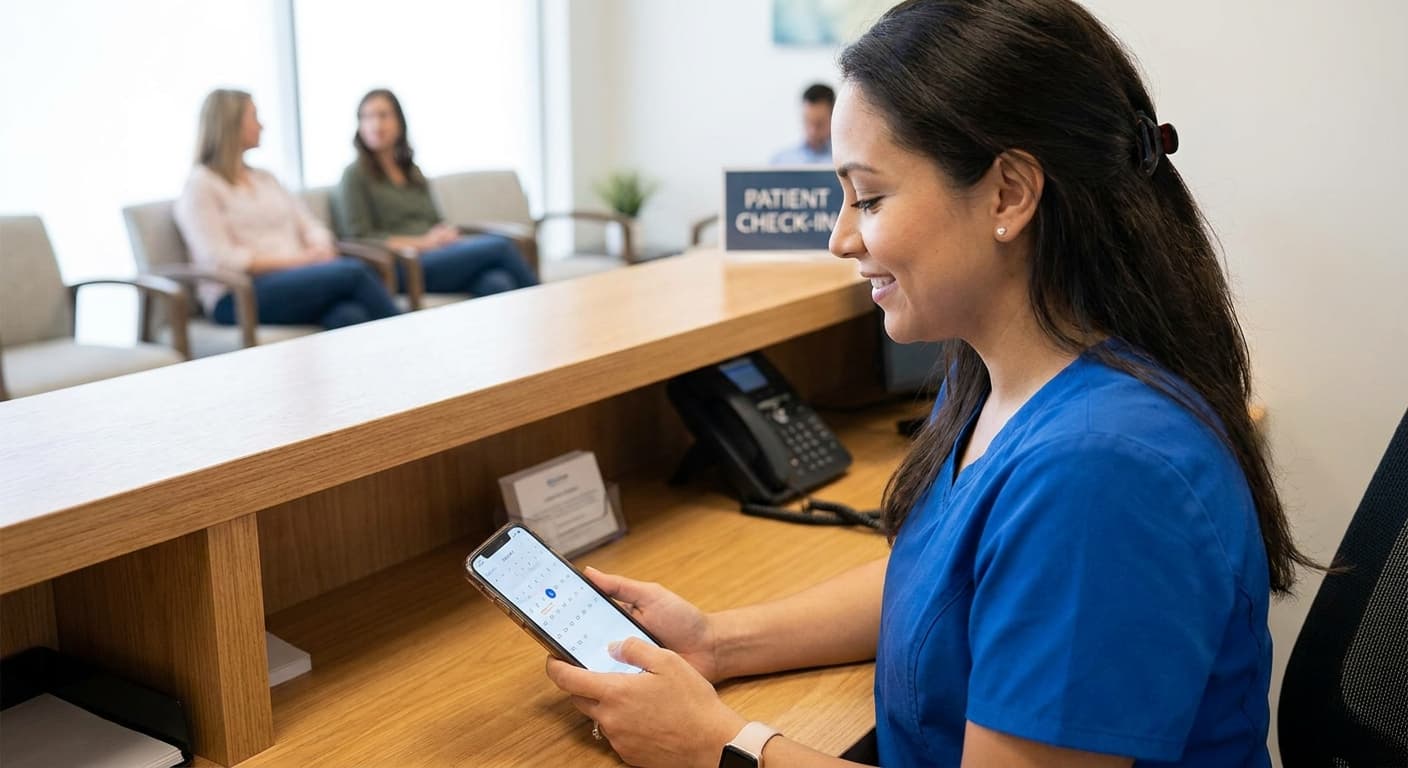
A Doctor's Guide to Managing Clinic Staff and Assistants Efficiently
Your assistants determine how smoothly your clinic runs. Here's how to delegate, define roles, and use digital tools so your team runs the clinic while you focus on medicine.

Most doctors are trained for years in medicine and roughly zero hours in managing people. Yet the day you open your own practice, you become a manager — and how well your assistants and front-desk staff work determines your patients' experience just as much as your clinical skill does.
This guide covers the practical side of running a small clinic team: what to delegate, how to define roles clearly, and how the right tools remove most day-to-day friction.
The core principle: doctors should do only doctor work
Every minute you spend searching for a patient file, answering a scheduling call, or chasing a lab report is a minute of clinical capacity your clinic paid a doctor's salary for. A well-run clinic pushes every non-clinical task to the team member best suited for it:
- Scheduling and rescheduling — front desk or assistant
- Patient registration and record updates — assistant
- Reminders and follow-up calls — automated where possible, assistant otherwise
- Pharmacy stock and dispensing prep — assistant or pharmacy staff
- Vitals and intake questions — assistant, before the patient reaches you
If you regularly do any of the above yourself, that's the first inefficiency to fix.
Define roles in writing, not in habit
Small clinics often run on tribal knowledge: everyone "just knows" who does what — until someone is sick, quits, or a new hire starts. Write down, even in one page per role:
- The tasks the role owns end to end
- The tasks the role assists with
- What the role must never do without the doctor (e.g., altering prescriptions, sharing records)
That last point matters for safety and compliance, not just clarity. Your practice software should enforce it: an assistant's account should be able to manage appointments and patient intake without being able to modify clinical notes or prescriptions.
Give assistants their own tools, not your login
A surprisingly common pattern in small clinics: everyone shares the doctor's login to whatever system the clinic uses. It feels convenient and it's a real problem — you lose any record of who did what, you can't restrict sensitive actions, and one password change locks out the whole team.
Modern clinic platforms solve this with role-based access. In Clinikly, for example, a doctor invites assistants to their practice with their own accounts: assistants manage the schedule, register patients, and handle reminders under their own identity, while clinical records and prescribing stay under the doctor's control. Everyone sees the same live schedule, so "I didn't know that appointment changed" stops being a daily conversation.
Run a ten-minute morning huddle
The highest-leverage management habit for a small clinic costs ten minutes: before the first patient, review the day with your team.
- Today's schedule — any overbooked stretches or VIP/complex patients?
- Yesterday's loose ends — pending reports, callbacks owed, unpaid balances
- Stock and supplies — anything running low that affects today?
Clinics that huddle catch problems at 9 a.m. that would otherwise explode at 1 p.m.
Measure the team on outcomes, not activity
Busy is not the same as effective. The numbers worth watching:
- Average patient wait time — the clearest signal of whether the front-of-house workflow works
- No-show rate — reflects how well reminders and confirmations are handled
- Time from patient arrival to doctor-ready — measures intake efficiency
- Rebooking rate for cancelled slots — measures whether freed time is recovered
Review these monthly with your team. When staff see the numbers move because of their work, the numbers become theirs, not yours.
Common mistakes to avoid
- Hiring for tasks instead of ownership. An assistant who "answers phones" waits for instructions; an assistant who "owns the schedule" solves problems.
- Keeping every decision with the doctor. If the front desk can't reschedule an appointment without asking you, you haven't delegated — you've added a messenger.
- Skipping training on the software. Thirty minutes of proper onboarding in your clinic system saves months of workarounds.
The payoff
A clinic where roles are clear, access is properly scoped, and the schedule lives in one shared system feels different within weeks: shorter waits, fewer dropped follow-ups, and a doctor who spends the day practicing medicine instead of managing chaos. Your patients will notice before you do.
Ready to modernize your practice?
Clinikly brings appointments, patient records, reminders, and your clinic pharmacy into one clean workflow.
Get Started Free