How Appointment Reminders and Notifications Improve Patient Retention
Retention isn't about winning new patients — it's about not losing the ones you already have. Here's how consistent reminders and notifications quietly keep patients coming back.
Clinics spend a surprising amount of energy trying to attract new patients and comparatively little protecting the ones they already have. That's backwards economically — a patient who already trusts you is far cheaper to keep than a new one is to acquire — and it's backwards clinically too, since continuity of care depends on patients actually returning.
Retention rarely fails because of a single bad experience. It fails quietly, one missed communication at a time, until a patient who meant to come back simply drifts to whichever clinic remembered them first.
The moments retention is won or lost
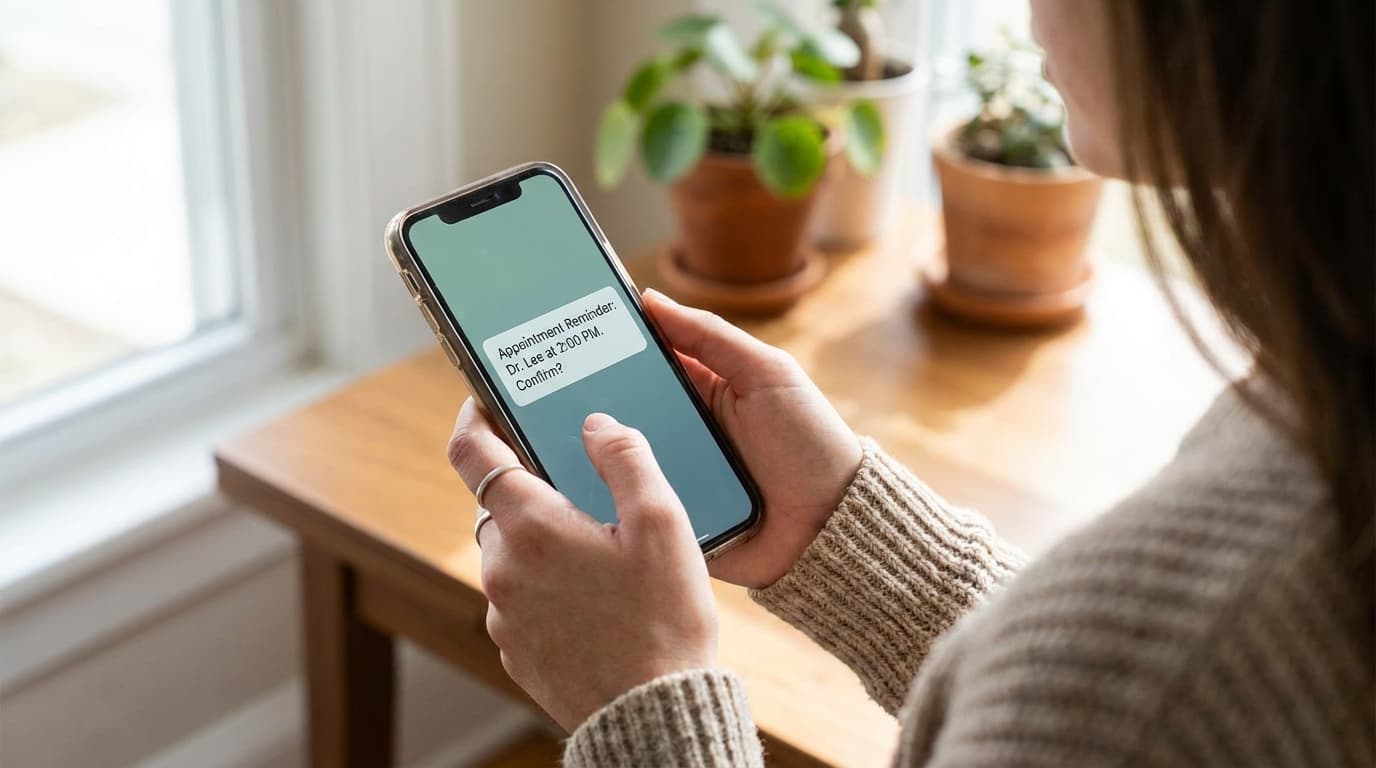
Between booking and the visit. A patient who books and then hears nothing until the appointment is more likely to forget, double-book something else, or simply deprioritize it. A confirmation and a reminder close to the date keep the appointment real in their mind.
Right after the visit. The days following a consultation are when patients are most engaged with their care — and also when clinics go silent. A short note confirming next steps, or a reminder of when to expect results, reinforces that the clinic is still paying attention after the door closes.
At the follow-up window. This is the single highest-leverage retention moment. A patient who is proactively reminded that it's time for their recheck experiences a clinic that's looking out for them. A patient who has to remember on their own, with no prompt, experiences a clinic that stopped thinking about them the moment they left.
When something changes. A rescheduled slot, a delayed doctor, a new service the clinic now offers — patients forgive disruption far more easily when they're told about it than when they discover it by showing up.
Why "we'll call them" doesn't scale
Every clinic intends to stay in touch. The reason it usually doesn't happen consistently is that manual outreach competes with the day's actual patients for staff time, and it always loses on busy days — which, unhelpfully, are exactly the days when the front desk is too stretched to also handle callbacks. The result is a retention effort that runs well in quiet weeks and evaporates in busy ones, which patients experience as inconsistency.
Automated reminders and notifications don't get busy. A confirmation fires the moment a booking is made regardless of how full the waiting room is; a follow-up reminder fires on the scheduled date whether or not anyone remembered to check.
What good notification design looks like
Volume is not the goal — relevance is. A patient bombarded with generic messages tunes them out, which defeats the purpose. Effective clinic communication is:
- Timed to the moment, not to a fixed campaign schedule — a reminder makes sense two days before an appointment, not two days after one that already happened.
- Personal and specific — the patient's name, the actual appointment time, the actual doctor, not a generic broadcast.
- Actionable — every message gives the patient something concrete to do (confirm, reschedule, book a follow-up), not just information to absorb.
- Respectful of frequency — enough to keep the relationship warm, not so much that messages become noise the patient learns to ignore.
The compounding effect on trust
Patients rarely articulate "this clinic has a good notification system." What they say is "they always follow up with me" or "I never have to remember anything with them" — and that feeling, repeated across each of the four moments above, is what retention actually is. It's not a marketing campaign; it's the accumulated impression that this clinic keeps its side of the relationship without being asked.
Where Clinikly fits
Clinikly builds notifications into the same workflow as scheduling and follow-ups: booking confirmations and reminders go out automatically, follow-up dates set during a consultation generate their own reminder without staff intervention, and patients can confirm or reschedule directly from the message. None of it depends on someone remembering to make a call on a busy Tuesday.
Retention, in the end, is just consistency made visible to the patient. Automated reminders are simply how a growing clinic stays consistent without staff having to be superhuman about it.
Ready to modernize your practice?
Clinikly brings appointments, patient records, reminders, and your clinic pharmacy into one clean workflow.
Get Started Free